
Every sales rep has sat through the same Monday. Fifty new leads in the CRM, no idea which ten are worth a call today. AI lead scoring solves that problem by ranking leads on their likelihood to buy before anyone on the team dials a number, using behavioural, firmographic, and intent data instead of a rep’s gut feeling.
That’s the short version. Here’s what’s actually happening under the hood, and why it changes how a sales team spends its day.
What “Highest-Value” Actually Means
Not every lead is worth the same follow-up. A lead who downloaded a pricing PDF and visited your site three times this week is not the same as someone who filled in a form once, six months ago, out of curiosity.
“Highest-value” usually comes down to two things layered on top of each other:
- Fit – does this person or company match your ideal customer profile? Industry, company size, job title, location, budget signals.
- Intent – are they actually behaving like a buyer right now? Repeat visits, pricing page views, demo requests, email opens, time spent on key pages.
A lead can score high on fit and low on intent (a great-fit company that’s just browsing) or the reverse (a smaller account that’s clearly ready to buy). AI scoring is useful precisely because it weighs both at once, instead of a rep guessing which factor matters more for a given lead.
How AI Lead Scoring Actually Works
Traditional lead scoring assigns fixed points: 10 for a form fill, 5 for an email open, 50 for a demo request. It’s simple, and it’s also wrong more often than people admit, because it treats every lead the same way regardless of what actually led to past sales.
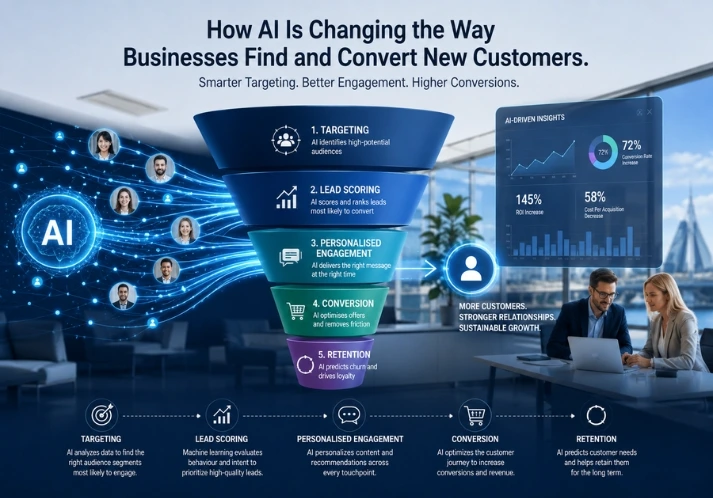
AI-based scoring works differently. It looks at your historical CRM data – who converted, who didn’t, and what those two groups had in common – then builds a model that predicts conversion likelihood for new leads based on patterns that actually held up, not assumptions someone made in a spreadsheet three years ago.
In practice, the model is usually pulling from four types of data:
- Firmographic data – industry, company size, revenue band, location.
- Behavioural data – pages visited, time on site, email engagement, content downloads.
- Intent signals – third-party data showing a company is actively researching your category, competitor comparisons, keyword activity outside your own site.
- Technographic data – what tools or platforms a prospect already uses, which can hint at compatibility or budget.
The model combines these into a single score, usually on a numeric scale, and – critically – it keeps retraining itself as new conversions and losses come in. A scoring model built in January drifts if the market shifts by June. Static rule-based systems don’t notice. AI systems adjust.
Old Scoring vs AI Scoring
The difference isn’t just “more advanced.” It changes how scoring behaves over time.
| Rule-Based Scoring | AI Scoring | |
| How points are assigned | Fixed values set by a person (e.g. 50 for a senior title) | Learned from what actually predicted past conversions |
| Adapts to market shifts | No – stays static until someone manually updates it | Yes – retrains as new data comes in |
| Handles complex combinations | Poorly – treats factors independently | Well – spots patterns between combined signals |
| Explains its reasoning | Easy to see (it’s just addition) | Varies by platform – better tools show the “why” |
| Setup effort | Low | Higher upfront, lower ongoing maintenance |
Rule-based scoring isn’t useless – for a very small, simple pipeline it can be enough. It just doesn’t hold up once you have enough volume and enough variation in your buyers that a flat point system stops matching reality.
What Happens Before the Phone Even Rings
This is the part most explanations skip. Scoring a lead is only useful if something acts on that score immediately, and that’s where automation comes in.
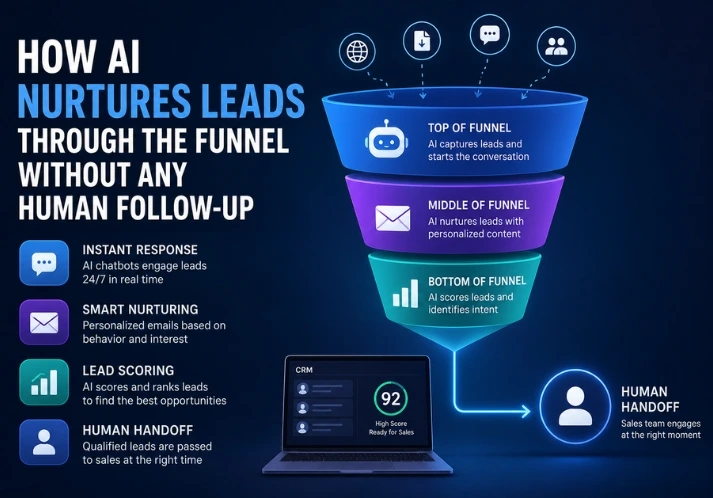
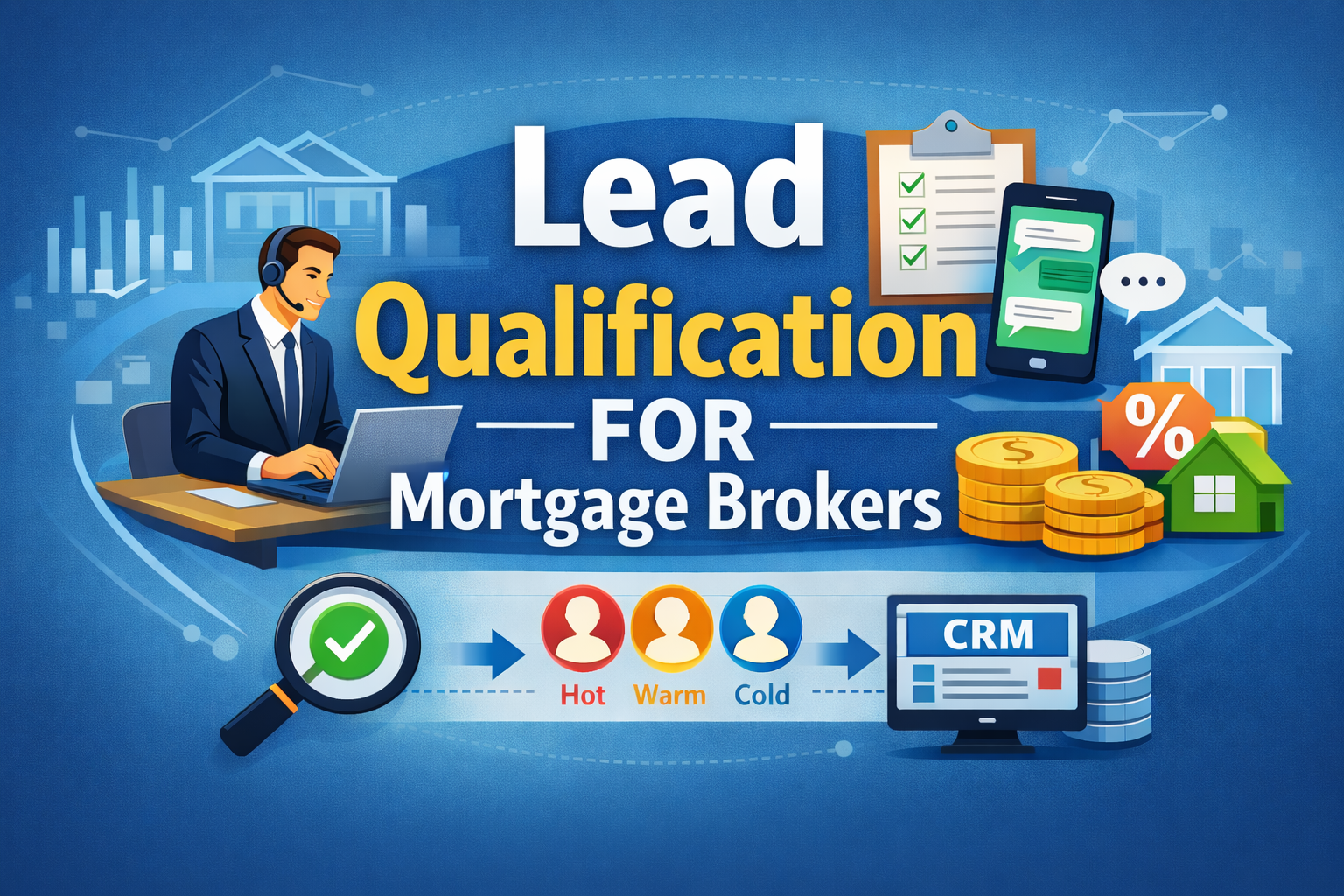
A typical sequence looks like this: someone fills out a form or requests a quote. Within seconds, the system pulls together their firmographic details, cross-references behavioural history, checks for intent signals, and generates a score. High-scoring leads get routed straight to an available rep’s queue, sometimes with a follow-up call or message triggered automatically so the prospect hears back while they’re still on your site or checking their inbox. Lower-scoring leads get folded into a nurture sequence instead – educational content, case studies, a slower cadence – rather than eating a rep’s time on a call that’s unlikely to go anywhere.
The gap this closes is response time. A rep manually working through a lead list might get to a hot prospect two days after they filled out a form. By then, they’ve usually already spoken to a competitor. Scoring paired with automated routing collapses that gap to minutes, sometimes seconds.
We’ve written before about how response speed alone can roughly double conversion rates – lead scoring is what tells the automation who to respond to first when several leads land at once.
The Numbers Worth Knowing
Lead qualification is a genuine pain point, not a hypothetical one. The U.S. Small Business Administration’s 2024 Small Business Trends Report found that a majority of businesses – roughly two in three – name lead generation and qualification as their top sales challenge.
Where AI scoring has been layered in, the productivity gains are measurable rather than anecdotal. A Brixon Group analysis of Forrester research found sales teams using AI-driven scoring saw double-digit gains in productivity and meaningful lifts in conversion rates. Separately, Salesforce’s 2025 State of Sales report found the large majority of AI-using sales teams reported revenue growth, with top performers spending noticeably less time on manual research than teams without AI support.
None of that means AI scoring is magic. It means it’s doing a job – filtering and prioritising – that most sales teams were previously doing manually, inconsistently, and usually too slowly.
Where This Goes Wrong
AI scoring isn’t set-and-forget, and a few mistakes show up again and again.
Dirty data in, bad scores out: Duplicate contacts, incomplete profiles, and inconsistent formatting (three versions of “Pty Ltd” in your CRM) confuse the model before it even starts. Clean data isn’t optional groundwork – it’s the whole foundation.
Black-box models nobody trusts: If a rep can’t see why a lead scored 85 instead of 40, they’ll quietly ignore the score and go back to gut instinct. The better platforms explain their reasoning, not just the number.
Treating the score as gospel: A high score means “worth prioritising,” not “guaranteed sale.” Reps still need to actually talk to the person. The score gets them there faster; it doesn’t close the deal for them.
Never retraining the model: Markets shift. A scoring model that isn’t retrained on fresh conversion data will keep ranking leads by what used to work, not what’s working now.
Getting Started Without Overhauling Everything
You don’t need an enterprise data science team to put this to work. A realistic starting point looks like this:
- Audit your CRM data first: Fix duplicates, standardise fields, fill obvious gaps. This step gets skipped constantly, and it’s the one that determines whether anything downstream works.
- Define what “converted” means for your business: Closed-won deal? Qualified opportunity? Booked demo? The model needs a clear target to learn from.
- Start with a platform that already sits inside your CRM: Rather than building a model from scratch. Most mid-market CRMs now have AI scoring built in or available as an add-on.
- Connect scoring to action: A score that just sits in a dashboard does nothing. Route high scorers to reps automatically, and put lower scorers into a nurture flow.
- Review and retrain quarterly: Check whether high-scoring leads are actually converting. Adjust thresholds if they’re not.
Frequently Asked Questions
Does AI lead scoring replace the sales team?
No. It changes what reps spend their time on – fewer cold, low-fit leads, more conversations with people who are actually ready to talk. The judgment and relationship-building still sit with the human.
How much data do I need before AI scoring works well?
Enough historical conversions for the model to find real patterns – most platforms recommend at least a few hundred closed deals (won and lost) to start producing reliable scores. Smaller data sets can still work with simpler models, just with less precision early on.
Is AI lead scoring only for large sales teams?
No. Small and mid-sized businesses often see the biggest relative benefit, since a two- or three-person sales team can’t afford to waste hours on leads that were never going to convert.
How is this different from marketing automation?
Marketing automation handles the nurturing – emails, content, follow-up sequences. Lead scoring feeds that system information about who deserves priority. They work together, not as substitutes for each other.
Where AI Automation Fits Into Your Sales Pipeline
Scoring is only half the picture. The value shows up when scoring is connected to your CRM workflows, follow-up sequences, and rep routing – so the moment a high-value lead appears, something actually happens.
That’s the piece we work on with clients through AI Automation – building the connective tissue between your website, your CRM, and your sales team so leads don’t just get scored, they get acted on. If you’re curious what that looks like for your own pipeline, a free consultation is a reasonable place to start.