
According to IAB Australia’s Internet Advertising Revenue Report, compiled by PwC, search advertising in Australia hit $8.0 billion in 2025, up 11.5% year-on-year, and it kept accelerating into 2026, growing 13.9% in the March quarter alone to make up roughly 44% of the country’s total online ad spend. That growth isn’t coming from a handful of big brands throwing money at Google. A lot of it is small and mid-sized Australian businesses realising that paid search is one of the only channels where you can show up in front of someone the moment they’re ready to buy.
Which is exactly why “PPC services” has become such a vague, overused phrase. Every agency in the country claims to offer them. Fewer actually explain what a business gets for its money, what a realistic timeline looks like, or where the budget goes once a campaign is live. That’s what this article is for.
What PPC Actually Buys You
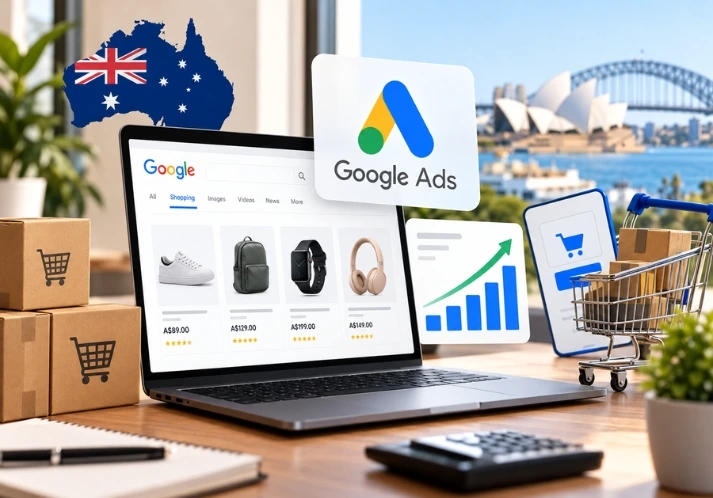
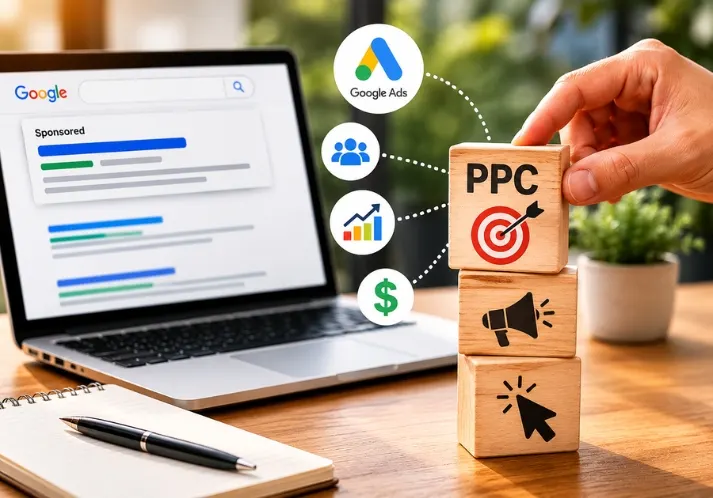
Pay-per-click advertising means you pay each time someone clicks your ad, not for the ad simply appearing. On Google, that usually means Search campaigns (text ads above the organic results), Shopping campaigns (product listings with images and pricing for retailers), Display campaigns (visual ads across partner websites), and Remarketing (ads targeting people who already visited your site but didn’t convert).
For an Australian business, the appeal is speed. SEO can take three to six months before you see meaningful movement, sometimes longer in competitive industries. A PPC campaign can start sending traffic within 24 to 48 hours of going live. That doesn’t mean it’s instantly profitable – the first two to four weeks are really about gathering data and tightening things up – but you’re not waiting half a year to find out if the channel works for you.
What “PPC Services” Should Actually Include
If an agency quotes you for PPC management, here’s what should be in scope. If it isn’t, ask why.
Keyword research and intent mapping: Not every keyword that mentions your product is worth bidding on. Someone searching “how does a heat pump work” is researching. Someone searching “heat pump installation Melbourne quote” is ready to buy. Good keyword work separates the two and puts budget where it converts.
Campaign structure: Google Ads is built in layers – account, campaigns, ad groups, ads – and how those are organised affects everything downstream, from Quality Score to how easily you can control spend by product line or service area.
Ad copy and creative: Text ads, responsive search ads, Shopping feeds, or display creative, written to match what the searcher actually typed, not generic brand messaging.
Landing pages: This is the part most in-house teams skip. Sending paid traffic to a generic homepage instead of a page built around the exact offer in the ad is one of the fastest ways to burn a budget.
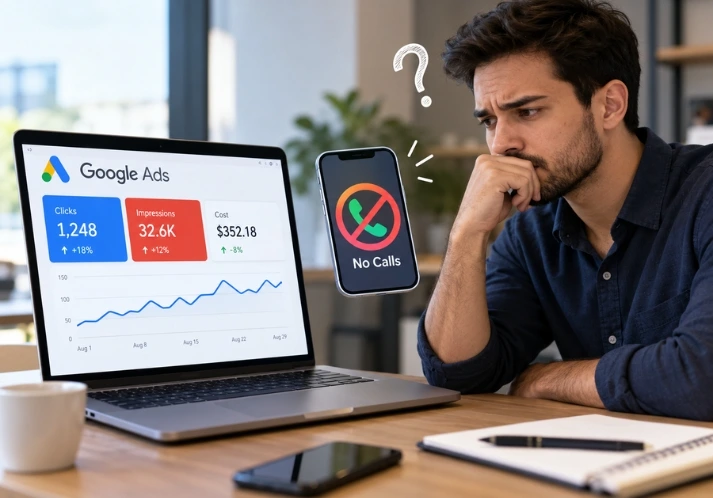
Conversion tracking: If you can’t see which keywords, ads, and campaigns actually produced a phone call, form fill, or sale, you’re optimising blind. Proper tracking setup – calls, form submissions, e-commerce transactions – is non-negotiable.
Bid management and daily optimisation: Campaigns aren’t set-and-forget. Budgets, bids, negative keywords, and audience targeting need adjusting as performance data comes in.
Reporting that means something: Click-through rate and cost per click are fine, but the numbers that actually matter to a business owner are cost per lead, cost per acquisition, and return on ad spend.
What Results Actually Look Like
This is where a lot of businesses get burned by unrealistic expectations, usually set by whoever sold them the campaign.
Budget-wise, most small to mid-sized Australian businesses start somewhere between $1,000 and $3,000 a month in ad spend, separate from any management fee. That range shifts a lot depending on industry – a Sydney conveyancer and a national e-commerce retailer are working with completely different cost-per-click benchmarks.
Timeline-wise: traffic can start within days, but a campaign genuinely optimised for cost-efficient conversions usually needs four to eight weeks of live data before it settles into a stable pattern. Anyone promising fully optimised results in week one either hasn’t run enough campaigns to know better, or is telling you what you want to hear.
And the honest answer on “how much will I pay per lead” is: it depends, and anyone who gives you a firm number before seeing your industry, location, and competition is guessing. What a good PPC partner should give you instead is a realistic range based on similar campaigns, plus a plan for tightening that number over time.
PPC vs SEO: Running Them Together
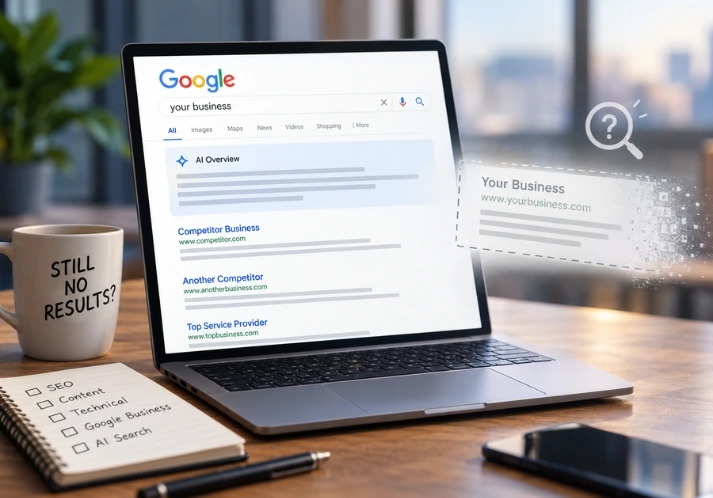
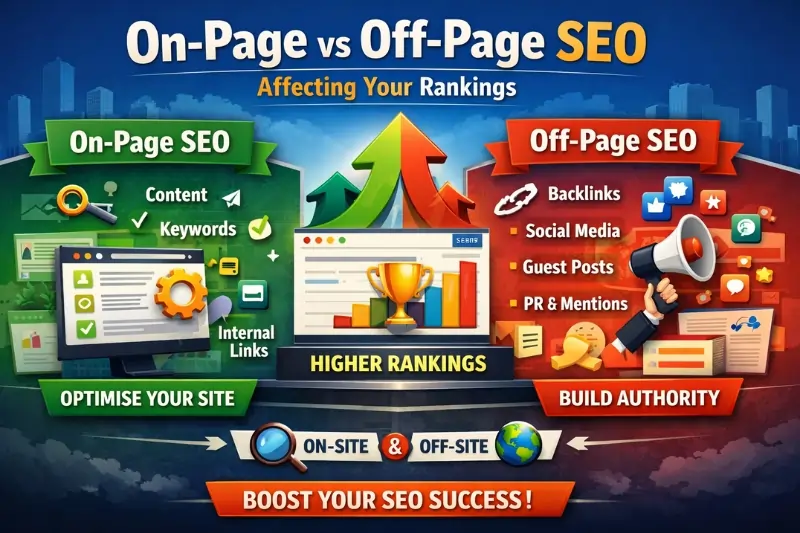
We get asked constantly whether a business should choose PPC or SEO. The honest answer is that they solve different problems. PPC gets you in front of people today, for as long as you’re willing to pay for the click. SEO builds a position in the organic results that keeps generating traffic without an ongoing per-click cost, but it takes months to build and is harder to move quickly.
Running both covers more of the search results page and gives you data both ways – PPC keyword performance often tells you which organic terms are worth chasing, and vice versa. If budget only stretches to one, the right call depends on how quickly the business needs leads versus how much runway it has to invest in a longer-term asset. We’ve covered this in more depth in our piece on SEO services in Australia, including what to check before signing with a provider.
Where Businesses Waste Money on PPC
A few patterns show up again and again in accounts we’ve taken over from another provider or from an in-house setup:
- Broad match keywords with no negative keyword list, so ads show for searches that have nothing to do with the offer.
- One landing page for every ad group, which tanks Quality Score and conversion rate at the same time.
- No conversion tracking, meaning decisions get made on gut feel instead of data.
- Campaigns left untouched for months, with the same bids and budgets set at launch and never revisited.
- Chasing clicks instead of leads, where a campaign looks successful on traffic volume but isn’t actually producing calls or sales.
None of these are exotic problems. They’re just what happens when PPC is treated as a “set it up once” task rather than an ongoing discipline.
Choosing a PPC Provider in Australia
A few questions worth asking before signing anything:
Do they manage the account in-house, or is it outsourced?
Ask directly. A lot of agencies quote a Melbourne or Sydney address and outsource the actual campaign management overseas, which isn’t automatically bad, but you deserve to know.
Can they show you a real account, not just a case study slide?
Screenshots of a dashboard with the client name redacted tell you very little. Ask to see the actual structure and reasoning behind a live or past campaign.
What’s included in the management fee, and what costs extra?
Landing page builds, conversion tracking setup, and creative are sometimes billed separately. Get that in writing upfront.
How is success reported, and how often?
Monthly is standard. Weekly check-ins during the first month of a new campaign are a reasonable ask while the account is still settling.
What happens if the campaign underperforms?
There’s no such thing as a guaranteed cost-per-lead in paid search, but a provider should be able to explain what they’d change and why, not just “give it more time.”
Where OptiRank Fits In
We’re a Melbourne-based team that’s been running SEO, Google Ads, and web development for Australian businesses for 14 years, and Google Ads management sits alongside our SEO and automation work rather than as a separate, siloed service.
That matters in practice – when we build a PPC landing page, it’s built with the same technical SEO standards we’d apply to an organic page, and conversion data from paid campaigns regularly informs the content and keyword decisions on the organic side.
We manage Search, Shopping, Display, and Remarketing campaigns for businesses across Melbourne, Sydney, Brisbane, Perth, Adelaide, and remotely Australia-wide, with reporting built around cost per lead and return on ad spend rather than vanity metrics.
If you want a look at what a properly structured account should include, our Google Ads management page breaks down our approach in more detail, or you can book a free consultation and we’ll review what’s realistic for your budget and industry.
Frequently Asked Questions
What do PPC services in Australia typically cost?
Management fees vary by agency and account size, but ad spend for small to mid-sized businesses usually starts between $1,000 and $3,000 per month, on top of any management fee. Larger or more competitive industries can require significantly more.
How fast do PPC campaigns start working?
Traffic can begin within 24 to 48 hours of launch. A campaign optimised for cost-efficient conversions, rather than just clicks, typically needs four to eight weeks of live performance data to stabilise.
Is PPC better than SEO for a new business?
It depends on how quickly you need leads. PPC delivers visibility immediately but stops the moment you stop paying. SEO takes longer to build but keeps generating traffic without a per-click cost once it ranks. Many businesses run both.
Do I need a Google Ads certified agency, or can I run campaigns myself?
You can run campaigns yourself, and plenty of small businesses do. The trade-off is time and the learning curve on bid strategy, negative keywords, and conversion tracking – mistakes there tend to be expensive before they’re educational.
What industries see the best return from PPC in Australia?
High-intent, transaction-ready searches tend to perform best – trades, legal and financial services, healthcare, and e-commerce all show strong PPC performance because the searcher is often close to a buying decision. Slower-consideration purchases can still work but usually need a longer remarketing runway.
How do I know if my current PPC campaign is being managed properly?
Ask for access to the account, not just a report. Check whether conversion tracking is set up correctly, whether negative keywords exist, and whether landing pages are specific to each offer rather than a single generic page.