
Search rankings decide who gets the phone call and who gets ignored. That’s the blunt reality for most Australian businesses right now. But the SEO industry has a trust problem: anyone can call themselves an “SEO expert” after watching a few YouTube videos, and plenty do. So before you sign a contract, it helps to know what separates a genuine SEO partner from someone who’ll burn through your budget and disappear.
Quick answer: Good SEO services in Australia combine technical site health, locally relevant content, transparent reporting, and increasingly, visibility in AI search tools like Google’s AI Overviews and ChatGPT. Avoid agencies that promise guaranteed rankings, use vague reporting, or rely on outdated link-buying tactics.
What “SEO Services” Actually Covers
SEO isn’t one task. It’s a mix of technical fixes, content work, and reputation building that together tell Google, and now AI search engines, that your website deserves to be shown to people searching for what you offer.
A proper SEO engagement usually touches:
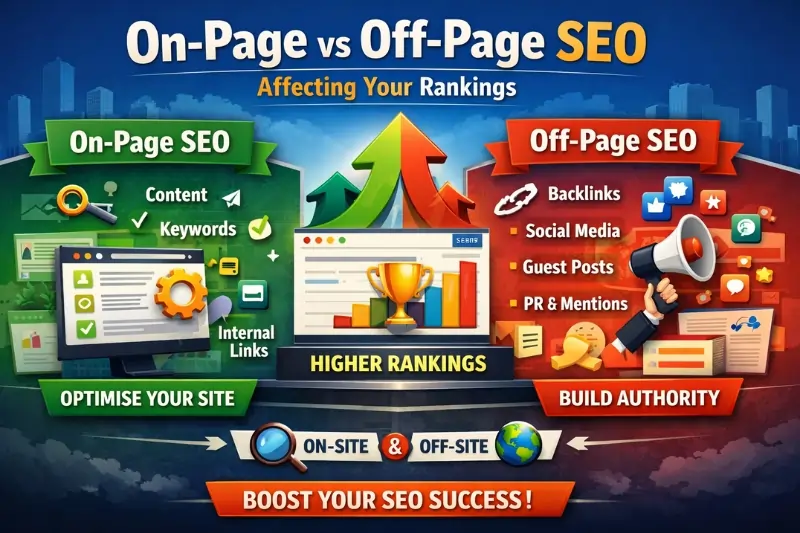
- Technical SEO – site speed, mobile usability, indexing, structured data
- On-page SEO – title tags, headings, internal linking, content that actually answers the query
- Local SEO – Google Business Profile management, local citations, suburb-specific landing pages
- Content strategy – blogs and service pages built around what customers actually search for
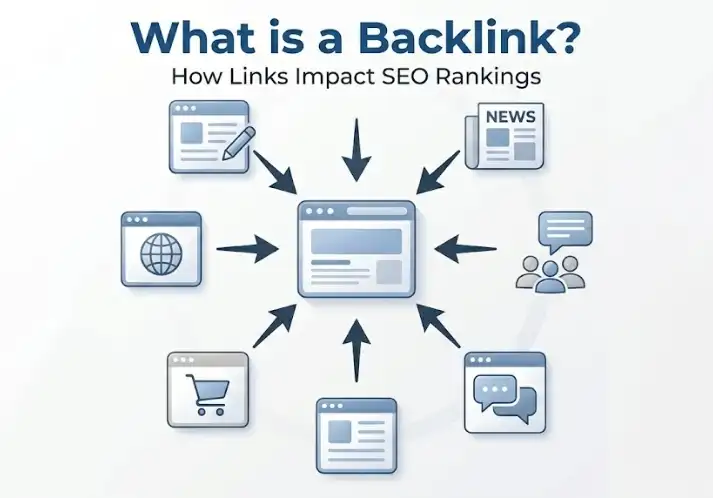
- Off-page SEO – backlinks from relevant, credible sources
- AI SEO / GEO – optimising for AI-generated answers on platforms like ChatGPT and Google’s AI Overviews
The fundamentals are the same everywhere, but the execution has to be local, which is why the suburb differs so much between a tradie in Werribee competing on “near me” searches and a dental practice in Moorabbin fighting three other clinics for the same keywords.
What to Look For in an SEO Provider
A clear, honest process: Ask any agency to walk you through their first 90 days. If they can’t explain what they’ll actually do beyond “improve your rankings,” that’s a warning sign. A credible provider should describe an audit, keyword and competitor analysis, technical fixes, and a content plan, in that order.
Real experience with businesses like yours: This is the “experience” part of E-E-A-T Google cares about. An agency that’s worked with a fashion retailer understands foot traffic and seasonal demand differently than one that’s only handled B2B software clients. Ask for case studies or references from a similar industry or location.
Technical competence, not just content writing: Plenty of agencies are content mills wearing an SEO label. Good SEO requires someone who understands Core Web Vitals, crawl budgets, structured data, and how to fix a site migration without tanking rankings for three months.
Transparent, verifiable reporting: You should see your own rankings, traffic, and conversions in Google Search Console and GA4, not just a PDF emailed once a month. If they won’t give you access to your own data, that’s not a partnership.
Local knowledge that goes beyond a template: Local SEO done properly means suburb-specific Google Business Profile optimisation, genuinely local content, and citations on directories that actually matter in that area, not a city name swapped into a generic template.
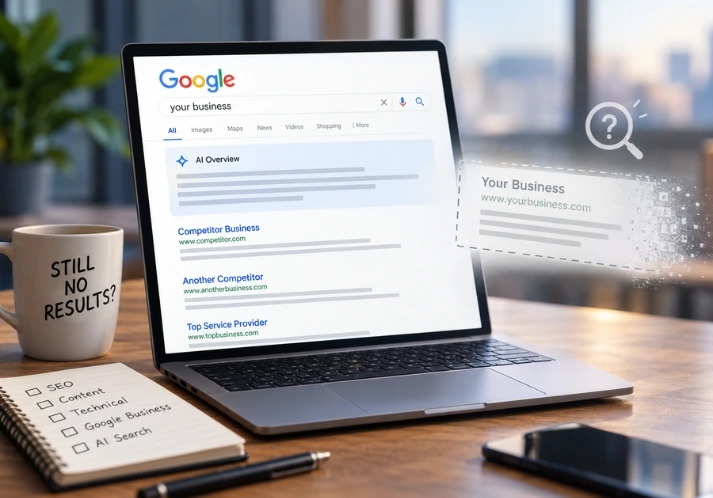
AI SEO awareness: More people are asking ChatGPT or Google’s AI Overview for recommendations instead of typing into a search bar. Ask whether a provider tracks visibility in AI answers and structures content so it can be pulled into AI summaries.
What to Avoid
Guaranteed #1 rankings: No one controls Google’s algorithm. Any agency promising a guaranteed position, especially fast, is either lying or planning tactics that get your site penalised.
Vague or missing contracts: If the scope of work isn’t written down clearly — what’s included, what’s billed extra, how results are measured — you have no way to hold anyone accountable.
Black-hat link schemes: Buying backlinks from low-quality directories or private blog networks might bump rankings briefly, then trigger a Google penalty that takes months to recover from.
Duplicate or thin location pages: A common shortcut is near-identical pages for every suburb with just the name swapped out. Google recognises this pattern, and it rarely ranks.
Set-and-forget contracts: SEO isn’t something you set up once. An agency that disappears after the initial setup isn’t providing an ongoing service, just a one-off audit with a monthly invoice attached.
No mention of AI search at all: If a provider’s entire pitch is still built around Google’s classic results and they haven’t mentioned AI Overviews, ChatGPT, or Perplexity, they may be optimising for a landscape that’s already shifting under them.
Why Local Context Still Matters, Suburb by Suburb
Search intent in Melbourne isn’t uniform across the map. A retail business in Docklands is competing with foot traffic from office workers and tourists. A trades business in Doncaster is dealing with a mostly residential customer base searching on mobile, often in a hurry. What works for one suburb rarely transfers cleanly to the next, which is why generic “service area” pages tend to underperform. Here’s what genuinely local SEO looks like across a few of Melbourne’s suburbs.
SEO Services in Werribee
Werribee sits in one of Melbourne’s fastest-growing western corridors, with new housing estates still being built out around it. Search demand here skews heavily towards trades, family services, childcare, and local retail, most of it on mobile. SEO services in Werribee need to compete for “near me” searches against a growing number of new businesses moving in alongside the population, which makes Google Business Profile accuracy and review volume especially important.
SEO Services in Tarneit
Tarneit shares that same growth-corridor pattern, but with an even younger, larger household base. Real estate agents, builders, and childcare centres see some of the highest search volume in the area. Because so many businesses here are relatively new, there’s less established competition for well-optimised long-tail keywords than in older, denser suburbs, which is an opening for anyone willing to build content properly from the start.
SEO Services in Preston
Preston is inner-north Melbourne, built around the High Street strip and a mix of long-standing local businesses and newer hospitality and retail openings. Search behaviour here is shaped by a mostly local, walkable customer base that already has plenty of choice, so ranking depends more on differentiation and genuine local content than on volume alone.
SEO Services in Moorabbin
Moorabbin has a strong trade and industrial base, plus proximity to Moorabbin Airport, which shapes a different keyword set than a typical residential suburb: think wholesale, automotive, and B2B services alongside standard local retail. SEO here often means targeting commercial and trade-specific search terms rather than the consumer “near me” queries that dominate residential areas.
SEO Services in Abbotsford
Abbotsford’s mix of converted warehouses, breweries, and creative agencies sits right against the CBD, which means it competes with both hyper-local searches and broader “Melbourne” searches for the same customers. Content built for Abbotsford needs to work at both levels, targeting suburb-specific intent while still holding up against inner-city competition.
SEO Services in Brighton
Brighton is bayside and affluent, with search demand driven heavily by boutique retail, real estate, and seasonal beachside businesses. Search volume swings noticeably with the seasons here, which changes how content and campaigns should be timed compared to a suburb with flatter, year-round demand.
SEO Services in Clayton
Clayton sits next to Monash University and its medical precinct, giving it a search profile shaped by students, researchers, and healthcare demand that looks nothing like a typical suburban market. Local SEO here has to account for a transient population that turns over every few years, alongside the more stable medical and research businesses that stay put.
SEO Services in Coburg and Coburg North
Coburg and Coburg North run along the Sydney Road strip, known for dense, multicultural retail and food businesses. Competition is high and often hyper-local, with customers frequently searching by specific cuisine, product, or service rather than generic terms, so keyword research here needs to go deeper than the obvious head terms.
SEO Services in Docklands
Docklands is a newer, corporate-heavy precinct on Melbourne’s CBD waterfront, with a customer base split between office workers, apartment residents, and tourists. Hospitality and professional services dominate search demand, and because the area is still relatively new, there’s often less entrenched local competition than in Melbourne’s older suburbs.
SEO Services in Doncaster
Doncaster is anchored by Westfield Doncaster, one of Melbourne’s largest shopping centres, which shapes a retail-heavy local search market. Family-oriented services and professional practices also do well here, competing in a suburb where residents are used to comparing options before committing, so trust signals like reviews and detailed service pages matter more than they might elsewhere.
SEO Services in Geelong
Geelong is a separate regional market entirely, an hour outside Melbourne with its own economy built on manufacturing, healthcare, and a growing tourism sector tied to the Bellarine Peninsula. SEO here shouldn’t be treated as a Melbourne suburb with a different name swapped in; it needs its own keyword research and competitor analysis based on who’s actually ranking in that regional market.
SEO Services in Melbourne (CBD and Inner Suburbs)
The CBD and inner suburbs are the most competitive tier, packed with agencies, professional services, and hospitality businesses all fighting for the same head terms. SEO services built for Melbourne need to account for this density directly, often by targeting more specific, less contested long-tail keywords rather than trying to outrank established players on broad terms alone.
Building genuine topic clusters around suburbs like these, rather than one generic “areas we serve” page, tends to perform far better in both traditional search and AI-generated answers, since each page gives search engines something specific and real to index.
AI SEO Is No Longer Optional
Traditional SEO optimised for a results page with ten blue links. That world still exists, but people are also asking ChatGPT for recommendations, letting Google’s AI Overview summarise an answer before they click anything, and using Perplexity to research purchases.
AI SEO (sometimes called GEO, or Generative Engine Optimisation) focuses on getting your business cited when an AI system generates an answer. That means clear, direct answers near the top of a page, schema markup so machines can parse what your business does, genuine topical authority instead of thin pages, and mentions on other credible sites, since AI models weigh corroboration across sources rather than trusting one page.
None of this replaces traditional SEO. It sits on top of it. A site with weak technical foundations won’t get cited by an AI model any more than it would rank on page one of Google.
A Practical Checklist Before You Sign
Before committing to any provider, ask for:
- A written scope of work with clear deliverables
- Access to your own Google Search Console and Analytics accounts
- Case studies or references from similar businesses or locations
- A plain-English explanation of their link-building approach
- Confirmation they track and optimise for AI search visibility
- A month-to-month option, at least initially
Frequently Asked Questions
How much do SEO services cost in Australia?
Most small-to-medium businesses pay between $1,000 and $5,000 a month, depending on competition, number of locations, and whether content or link building is included. Anything significantly cheaper is worth scrutinising.
How long does SEO take to show results?
Most businesses see meaningful movement within three to six months, with stronger results compounding over six to twelve. Anyone promising results in weeks is overstating what’s achievable.
Is AI SEO different from regular SEO?
It builds on the same technical and content foundations but adds a focus on structured, citable content that tools like ChatGPT and Google’s AI Overviews can pull into their answers.
Do I need separate SEO for each suburb my business serves?
If you genuinely serve multiple distinct areas, locally relevant pages for each tend to perform better than one generic “service areas” page, provided each has real local detail.