
If there’s one thing business owners are tired of hearing, its vague promises about “AI transforming everything. Yes, AI Applications are everywhere. Yes, it’s powerful. But the truth is simple: AI matters when it directly contributes to revenue, efficiency, or customer experience. At Optirank, we work with Melbourne-based businesses across tech, real estate, retail, hospitality, healthcare, and professional services.
We’ve noticed a clear pattern: the companies seeing real ROI from AI Applications are the ones that use it strategically, not for gimmicks.
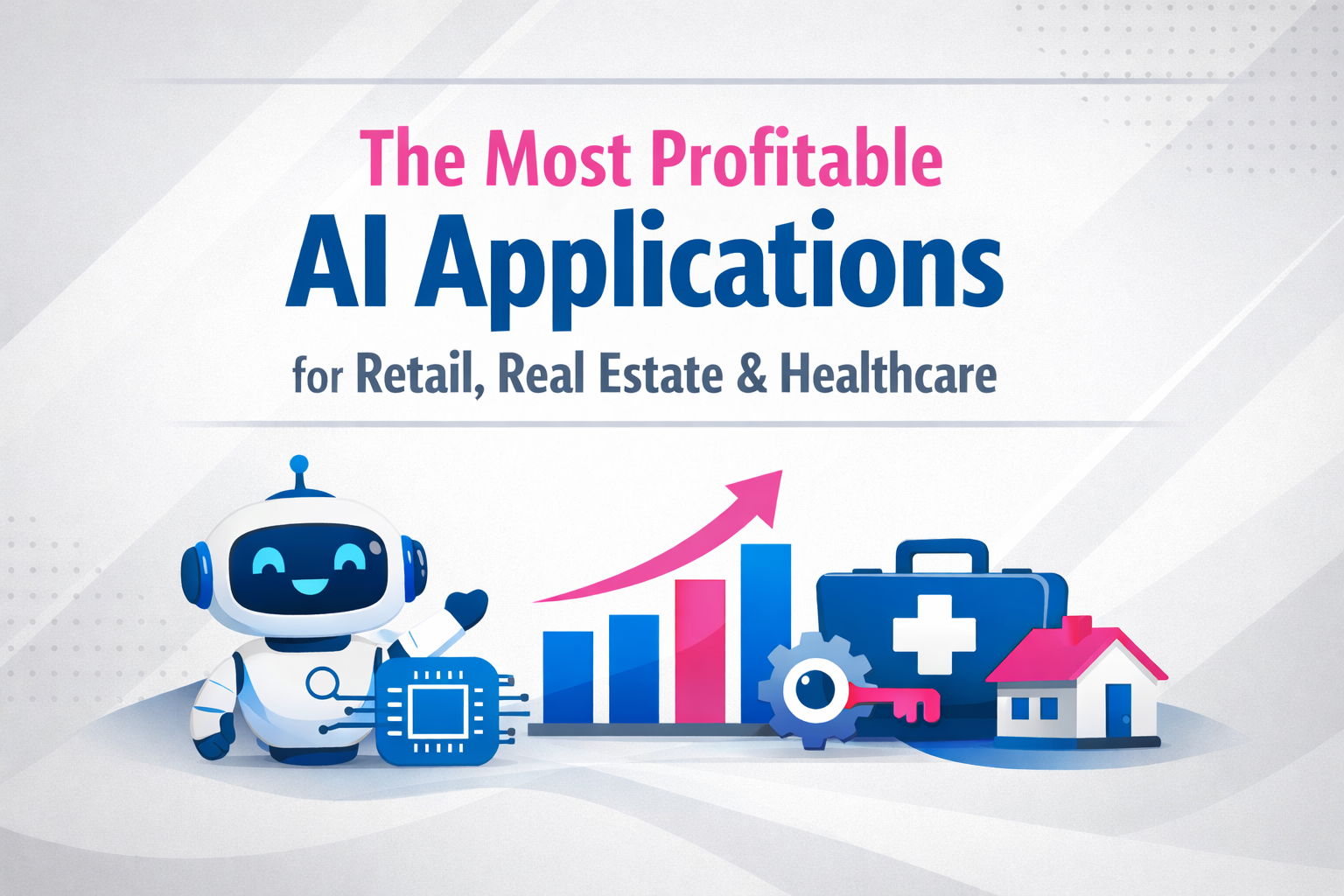
Top 6 AI Applications Use Cases Delivering ROI Across Key Industries
Below are the industry-specific AI applications that genuinely deliver results, backed by examples from what we’ve seen working in this field.
1. Retail & E-Commerce: AI Applications That Boosts Conversions
Retailers, particularly in competitive pockets such as Richmond or Chadstone, usually pay too much attention to traffic. Traffic is, however, only important when people make purchases. This is where AI Applications helps provide quick ROI:
Artificial Intelligence-based Personalised Recommendations
Think “Netflix for shopping”. Browsing history, cart behaviour, price sensitivity and buying history are analysed by AI in order to show the appropriate products at the correct time. The outcome?
- Higher average order value
- More repeat purchases
- Lower abandoned carts
Conversion is also growing by 15% among even smaller brands in the Melbourne boutique marketing when personalised recommendation engines are added.
Intelligent Inventory Projection
Rather than having to make assumptions about what will be in demand, AI Applications enables you to know what will be in demand, when you will run out of stock, and which SKUs are costing you needlessly. Retailers achieve significant dead stock reduction – 20%-40% is the norm.
ROI wisdom: Guess less, waste less, sell more.
2. Real Estate With AI Applications
The real estate business is based on timing, neighbourhood knowledge and connections. That’s where AI steps in.
Lead Qualification and Priority Scoring
Agents spend hours conversing with hot leads. AI classifies questions in terms of buy or sell. It analyses:
- Browsing behaviour
- Form submissions
- Neighbourhood interests
- Budget patterns
Important leads are targeted by agents, not time-wasting leads.
AI-generated real estate descriptions and virtual tours
Marketing teams in property take days to prepare listings. AI tools can produce:
- Polished descriptions
- Area profiles
- Lifestyle pitches
- Even images of staging online.
- All in minutes, not days.
- Predictive Market Insights
Based on AI, it is possible to indicate which suburbs (Hawthorn, Kew, Box Hill) are bubbling and which areas are in demand. Agencies that do it proactively are more successful in making listings.
ROI wisdom: rapid listing, rapid closing.
3. Hospitality With Artificial Intelligence
Margins in the hospitality sector are low. The expectations of customers are also high. AI assists hotels, cafes, and restaurants in Melbourne to provide superior service without having to increase staff workload.
On-the-fly Pricing & Demand Projection
AI predicts:
- Peak hours
- Seasonal surges
- Event-based demand (footy finals, festivals, concerts)
This assists companies in maximizing the allocation of tables, order placement and manpower.
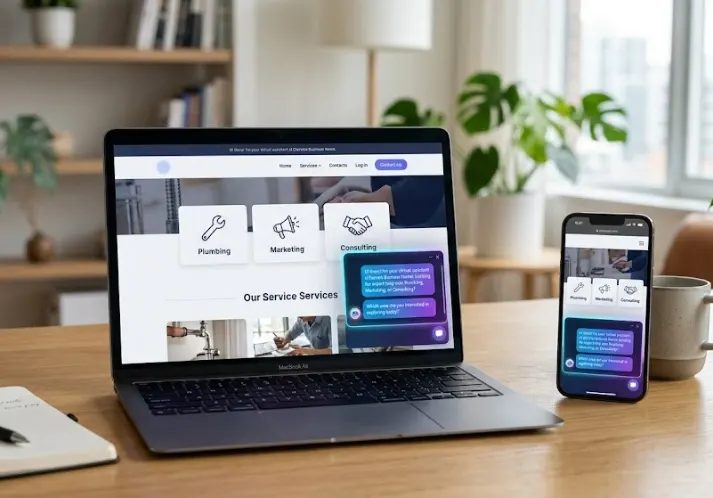
Chat Assistants to Make Bookings
These tools automate:
- Reservation management
- FAQs
- Menu questions
- Dietary queries
- Table updates
The customers receive instant replies, and the employees have more time to serve.
Sentiment Analysis & Review Monitoring.
Rather than spending time scrolling through Google or TripAdvisor, AI will keep track of the trends in the reviews and notify you of any issues before they grow.
ROI Insight: The more the reviews, the more bookings, the more money.
4. Healthcare & Wellness: AI Will Not Replace
Medical workers do not have time to experiment with the glittering technology. They require effective, useful equipment.
Automated Handling of Appointments
AI Applications deal with scheduling issues, reminders, cancellations, and follow-ups. Clinics decrease no-shows by as much as 30%.
Patient Intake and Pre-Screening
Forms of AI Applications have the capability of gathering symptoms, history and concerns before a consultation. That saves the time of doctors and accelerates the workflow of patients.
Medical Billing Accuracy
AI eliminates human mistakes, identifies abnormalities, and accelerates the processing of claims.
ROI insight: More patients, fewer administrative employees.
5. Professional Services: AI, which Makes Expertise a Revenue
The AI is more subtly helpful to law firms, accountants, consultants, and financial advisors.
Document Processing and Summarisation
Contracts, reports, and financial models – AI can be used to summarise, compare versions, or point out risks. Professionals do not spend as much time reading but giving advice.
AI-Assisted Research
Professionals extract data in a few minutes: case law, tax, market trends, and compliance. AI turns raw data into visualized insights and plain-English explanations.
Reporting Automation of Clients
The consultants usually spend hours preparing monthly or quarterly reports. AI transforms unstructured data into visualizations and plain-English descriptions.
ROI knowledge: less administration time, more billable time.
6. AI That Wastes Less and Operates Less.
The industrial processes abound with data, yet the majority of it goes to waste. AI helps unlock it.
Predictive Maintenance
AI can foresee when machines will break down or when systems require servicing, as opposed to machines breaking down. This cuts downtime by 30–50%.
Quality Control Detection
Manual checks are inaccurate and slow in detecting defects in products compared to AI systems. Better quality = fewer returns = greater margins.
Energy Use Optimization
AI is used to track electricity, heat, cooling, and machine cycles to reduce energy waste.
ROI knowledge: reduced downtime, reduced waste, increased output.
Why Industry-Specific AI Works Better Than Generic Tools?
Generic AI tools can be used effectively in brainstorming, but industries require more than content generation.
Industry-specific AI:
- Aware of sector workflow.
- Integrates with the current systems.
- Addresses real bottlenecks
- Optimizes decisions that impact revenues.
- Fills in the monotonous work.
- Scales without high costs
This is the reason why ROI is quicker and more reliable.
What does this mean for Melbourne businesses?
It does not matter whether you are a retail brand in Fitzroy, a real estate agency in the eastern suburbs or a small e-commerce store that is growing; the point is not to future-proof your business with buzzwords.
It is to apply AI in the area where it generates money or saves time in the short term.
In Optirank, we assist businesses:
- Find the appropriate AI systems.
- Assimilate them with current work processes.
- Train teams to use the tools
- Calculate ROI by facts, not fiction.
Since AI must be perceptionally similar to an upgrade, not a science project.
Final Thought: AI ROI Is Real, but Only When Done Right
The hype is fading. What remains are the use cases that genuinely move the needle. And as more industries adopt AI, the gap between early adopters and latecomers will only widen.
The question isn’t “Should you use AI?” It’s “Which AI solutions actually pay off for your industry?” If you’re ready to explore AI for your business, Optirank can help you choose tools that make sense for your goals—and deliver results you can measure, not guess.