
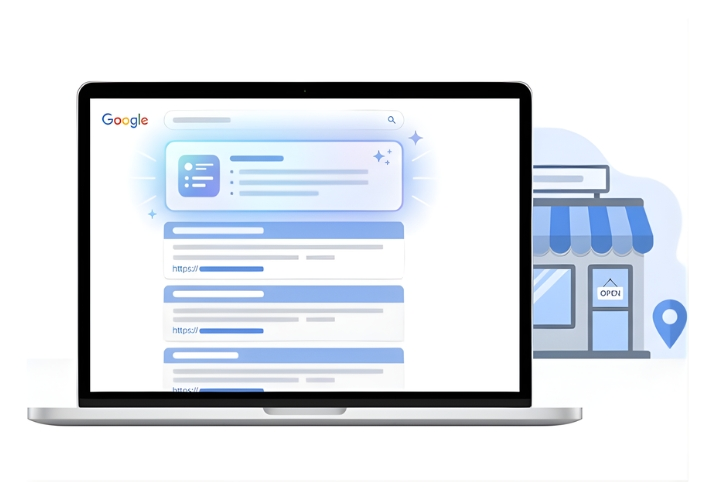
You should know how search engines work in case you want more people to visit your site. This is where On-page vs Off-page SEO comes in. The two concepts are highly significant if your goal is to increase traffic. However, there is nothing to be worried about; this is not a frightening technical tutorial. Think of your website as an interesting shop people want to visit, when you rank high in Google, more people will browse your page.
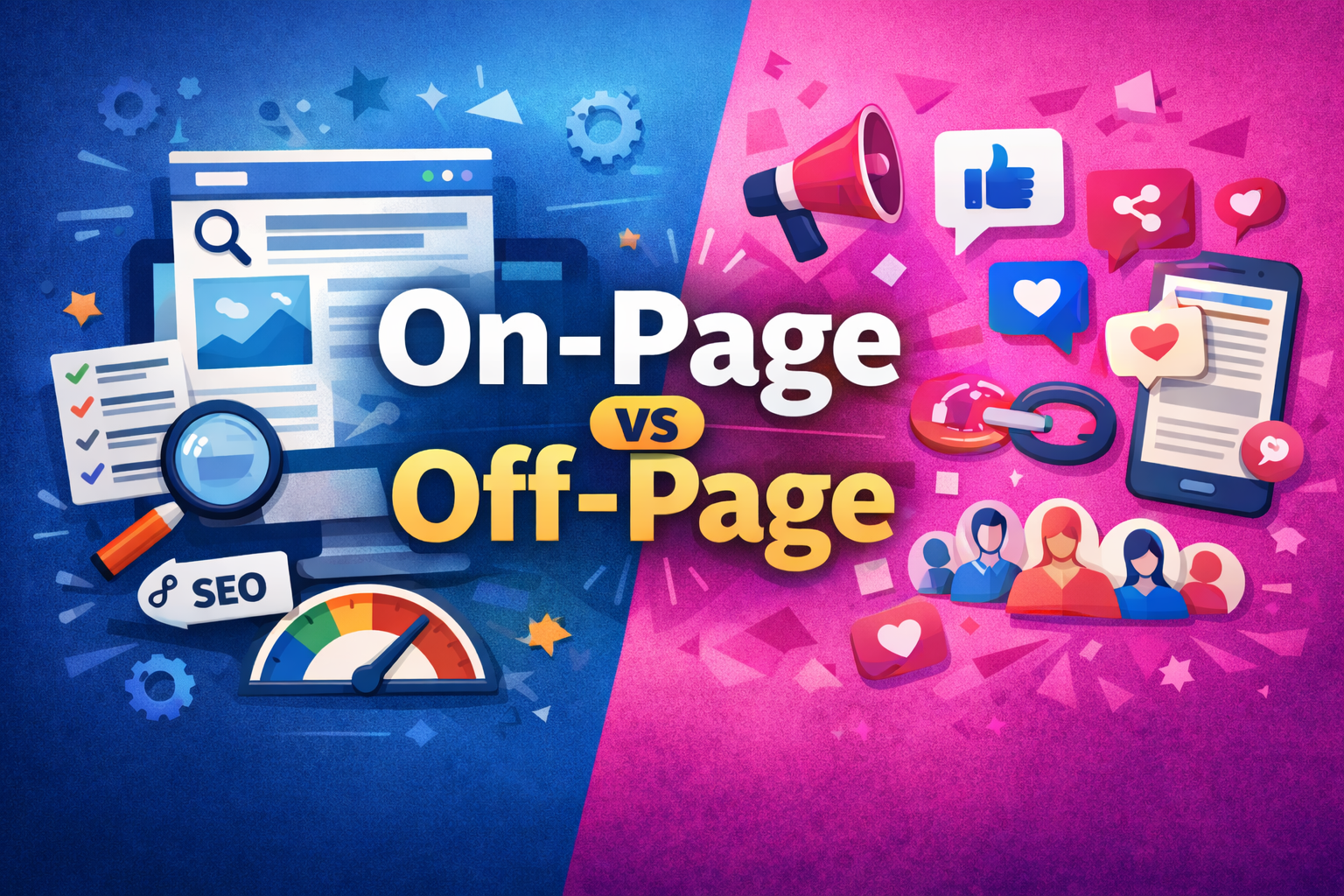
On-page vs Off-page SEO: Let’s explain this in an easy way. Suppose that your website is a store. On-page SEO refers to how organised, neat and welcoming your shop is. Off-page SEO is the way people outside your store talk about it and recommend it to others.
On-page vs Off-page SEO: Starting with On-Page Essentials
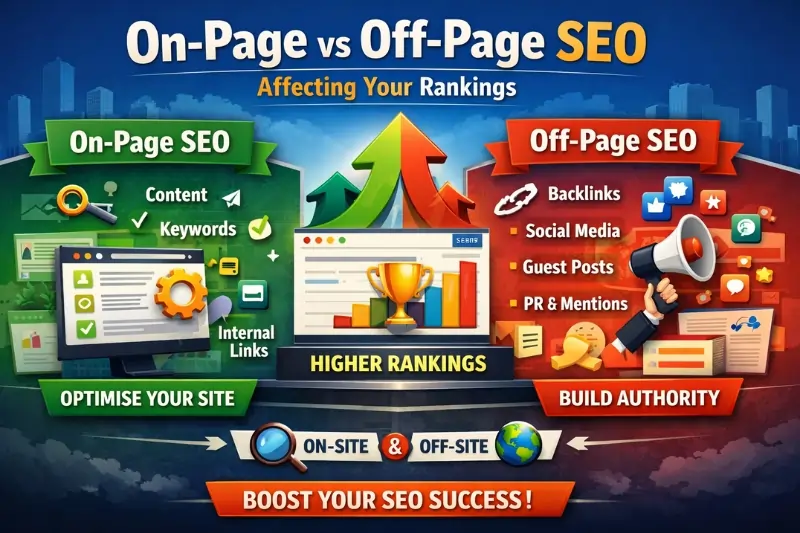
On-page SEO includes everything you can control on your website. It is the same as organizing your room, so your friends can easily find things. When the best features are clearly visible and your room is tidy, the guests are always happy. In the case of Google, on-page SEO allows the search engine to understand what your page is about..
On-page SEO means using the appropriate words on your page. You want to include the terms that people are searching for. For example, when someone searches for the best sneakers for running, and your page shows such topics, those particular words should appear in your text, titles, and descriptions.
You should write the words naturally and make real people enjoy reading your page. This is why the explanation of on-page vs off-page SEO is not just based on the keywords, It’s about giving real value.
What is Off-page SEO?
Now let’s discuss the external world – off-page SEO. And in case your tidy room represents on-page SEO, off-page SEO is what people say about your room when you are away. It’s all about reputation.
Search engines consider numerous indicators that are external to your site to determine a website’s importance. Among the largest indicator backlinks are the strongest signals. When a different site links to yours, it is a vote of trust. It does not matter whether it is a small blog or a large news site. Each link tells Google to know that your page is worth listening to.
This is the reason why off-page SEO is so powerful. Google may not trust it so much if no one else is talking about it, even though your website may be well optimised internally. One of the aspects of off-page optimisation is to have other sites link to you, discuss you and share your content.
Your article could be of interest to people who may share it on social media. Or a blogger may use your site in their article. Mentions including links are even better, as they demonstrate that your site is actively under discussion.
On-Page vs Off-Page Working Together
Suppose you have to write a wonderful blog post about healthy snacks for students. In case your article is easy to read and you use the right words (strong on-page SEO), Google understands it. However, if no other website links to it or shares it, therefore, your traffic may remain low . On the other hand, when numerous websites link to your site, but the content is chaotic or confusing, then people may leave quickly. That informs Google that something is not right.
That is why the true power comes when On-page vs Off-page SEO cooperate. Your site will begin to climb up the search rankings when your content is well structured, conversational and others talk about it and link it to it. This leads to more visibility, more traffic, better results, and more clicks. Most of the businesses are too focused on one or the other side only. Some improve on-page SEO and ignore relationship building. Others attempt to have numerous links, without improving the content quality. Balance is the wisest course of action. As well as having your page ready to receive visitors, and encourage the world to talk about it.

How to Improve On-Page SEO
Page SEO does not require the capabilities of big tech to improve. Begin with things that you already know:
- Write not for machines, but for people. Actual real-life people must like your content.
- Provide headings so that readers can quickly scan your page.
- Consider search words that your audience may be using. Then include them naturally.
- Include high quality images and use simple text to describe (alt text)
- Ensuring that your page loads quickly. In case it is sluggish, the people will go away.
These steps are part of any strong On-page vs Off-page SEO strategy, as they assist your content to get noticed and shared.
How to Improve Off-Page SEO
Off-page SEO is some kind of social thinking. You will have to be active and make networks online:
- Post your content on social media in order to increase the number of people who view your post.
- Reach out bloggers and sites in your niche and request links.
- Write guest posts and link back to your site.
- Create content valuable enough that people would like to share it.
- Interact with your audience, by commenting, and interacting.
Google will notice when people begin visiting your page, share and link it. This is an important trust indicator in On-page vs Off-page SEO strategies.
Why Both Matter for Rankings
‘Ranking’ refers to your website position in search engine results. High placements are synonymous with increased visibility, a greater number of clicks, and, ultimately, more conversion, whether it is a purchase of an item or reading a blog.
In case you are on-page focused, your content may be excellent, yet Google may believe that you don’t have high authority . When you are concerned only with off-page SEO, you may get traffic, but still, the visitors may leave the page due to poor content quality. You need both.
Consider your most preferred video on the internet. It is likely to be good (on page) and has been watched, liked and shared by many people (off page). That is the combination signals value to search engines.
Final Thoughts
Now you have the answer to the question, ‘What is the meaning of On-page vs Off-page SEO?’ On-Page SEO makes your site solid from the inside whereas the Off-Page SEO gives strength from outside. These two assist in ranking your site and getting more visitors.
Traffic is a process that requires some time; however, when you know how to make these concepts work, it becomes much simpler. Start small. Improve your content. Make friends online. Let your website grow.
And one more thing to keep in mind is that with Optirank’s seo experts, your site can attract more users without relying on pay per click advertising. That is the actual strength of On-page vs Off-page SEO.


















One Response