What is retargeting – and why does every shoe you’ve looked at online seem to follow you around for days?
That’s not a coincidence. That’s a paid advertising strategy, and it’s one of the few that actually works because it doesn’t waste money on strangers.
Most visitors who land on your website leave without doing anything. They don’t buy, don’t call, don’t fill in the form. Some had every intention to – they just got distracted, compared prices, or needed more time. Without retargeting, those people are gone. With it, you get another shot.
What Is Retargeting, Really?
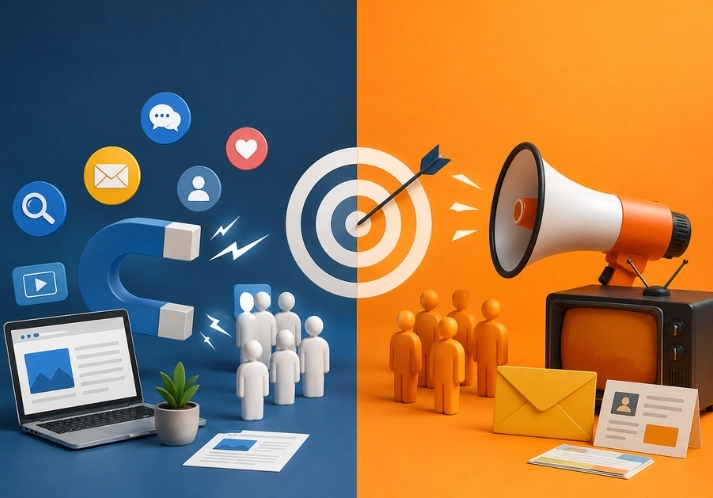
At its core, retargeting is a way to show ads to people who’ve already been on your website or engaged with your brand online.
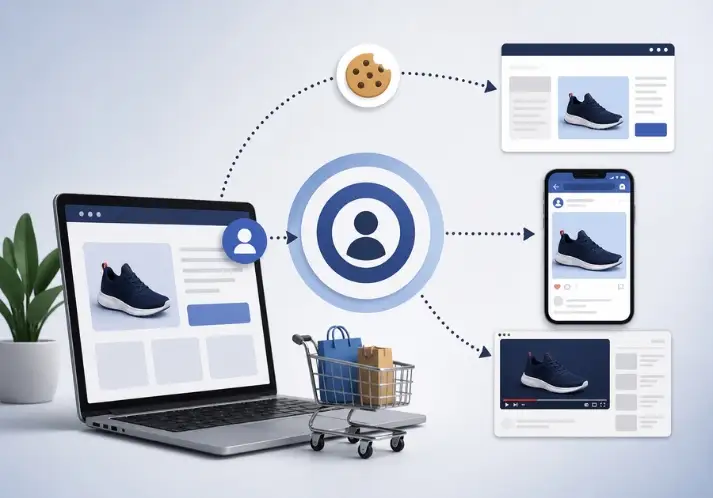
When someone visits your site, a small piece of code called a tracking pixel drops a cookie into their browser. That cookie quietly flags them as a past visitor. As they browse other websites, scroll through social media, or watch YouTube videos, your ads start appearing – reminding them of what they looked at and nudging them to come back.
That’s the whole mechanic. Simple in theory, but very effective in practice.
98% of website visitors don’t convert on their first visit. Retargeting is the strategy designed to recover a slice of that 98%.
How the Pixel Actually Works
Here’s the process broken down:
- A person visits your website and browses a page, product, or service
- The pixel on your site fires and stores a cookie in their browser
- They leave without taking action
- Your ad network sees that cookie when they visit other sites or apps
- Your ads show up – relevant, timely, and familiar
The cookie is what makes the whole thing possible. It’s why retargeting can only show ads to people who’ve actually been on your website, not random strangers. That targeting precision is also why it converts better than cold traffic campaigns.
What Is Retargeting vs Remarketing – Same Thing?
Many people use these interchangeably. They’re close, but not identical.
Retargeting runs through paid ad platforms – Google, Meta, and LinkedIn. It serves display or social ads to past visitors as they browse the web.
Remarketing typically refers to email campaigns sent to past visitors or customers. Abandoned cart emails, follow-up sequences, win-back campaigns – that’s remarketing territory.
Both have the same end goal: bring people back. The difference is the channel. Retargeting uses ads; remarketing uses email. For most businesses, combining both gives you the best coverage.
Types of Retargeting Worth Knowing
Not every retargeting setup looks the same. Here are the main formats:
Pixel-based retargeting: The most common. Your website automatically tracks every visitor with pixel tags, and your ad network serves them ads on other sites and platforms. Works in real time, needs no manual list uploading.
List-based retargeting: You upload your own contacts – an email list, CRM export, or customer database – to Meta or Google. They match those emails to real user profiles and show your ads to those people directly.
Search retargeting (RLSA): This runs on Google Search. When past visitors search for your keywords again, you can bid more aggressively to get your ad in front of them. They already know you – you’re just making sure you show up when they’re actively looking.
Dynamic retargeting: Your ads automatically pull in the specific products or pages the person viewed. If they looked at a particular laptop on your site, the ad shows that exact laptop with its price. Dynamic product ads can increase conversion rates by 50–200%, which makes sense – there’s nothing more relevant than showing someone the exact thing they were considering.
Social media retargeting: Runs through Meta, LinkedIn, TikTok, and other platforms. When past site visitors open their social apps, your ads appear in their feed. For consumer brands, Facebook and Instagram retargeting tend to deliver strong results. For B2B, LinkedIn is usually the better bet.
Why Retargeting Pushes Conversions Up
The reason retargeting performs well isn’t complicated. You’re not trying to convince a cold audience to care – they already care. The job is just to bring them back.
Retargeting ads are 10x more effective than standard display ads, with an average CTR of 0.7% compared to 0.07% for regular display.
Website visitors who are retargeted are 70% more likely to convert.
Segmented retargeting campaigns increase CTR by 76% and conversions by 147% compared to campaigns that just dump everyone into one big audience.
And on cost: retargeting campaigns typically deliver CPA reductions of up to 50% compared with campaigns targeting cold audiences.
The underlying reason for all of this is familiarity. A person who saw your brand once and bounced is in a very different headspace than someone who has never heard of you. They don’t need convincing that you exist – they just need a reason to come back now.
How to Run a Retargeting Campaign That Gets Results
Having the pixel installed is just the starting point. Here’s what actually moves the needle:
Split your audience by intent level
Don’t serve the same ad to everyone. Someone who spent 4 seconds on your homepage is very different from someone who got to the checkout page and didn’t complete their order.
Common audience segments worth creating:
- All site visitors (broad, lower intent)
- Product or service page visitors (mid intent)
- Cart abandoners or form starters (high intent)
- Past customers (for upsell or cross-sell)
Each group needs a different message. The cart abandoner might just need a small incentive to come back. The person who reads one blog post probably needs to understand your offer better first.
Match your ad message to where they dropped off
If someone got halfway through a quote form and left, don’t serve them a generic brand ad. Acknowledge that they started the process. If someone looked at a specific product, show them that product – not a random selection from your catalogue.
This alignment between what they did and what your ad says is what makes retargeting feel useful rather than creepy.
Set a frequency cap
The average Meta user sees a retargeting ad 3.5 times before converting, but performance drops past 6 views.
So, cap impressions. Somewhere around 3–5 per week per person is a reasonable starting point. Showing the same ad to someone 25 times in a fortnight doesn’t convert them – it just makes them resent your brand.
Refresh your creativity every few weeks
Stale ads stop getting clicks. A DTC clothing brand that rotated new testimonial clips every two weeks lifted CTR from 0.9% to 1.4% and cut acquisition costs by 22%.
Swap in new visuals, test different headlines, try video alongside static images. The people in your retargeting audience don’t change much – your job is to keep the ad interesting.
Shorten your retargeting window for low-cost products
Short windows of 7–14 days outperform longer ones by around 30%.
For someone considering a $30 purchase, they’re not going to sit on that decision for 90 days. Tight windows keep your ads relevant and reduce wasted impressions. For high-ticket or B2B purchases with longer decision cycles, extend accordingly.
Remove recent converters immediately
This sounds obvious but it gets skipped constantly. The moment someone buys or enquires, pull them out of your conversion campaign. Showing a “Buy Now” ad to someone who just bought from you wastes money and creates a poor experience. Move them to a retention or referral audience instead.
Retargeting for B2B vs B2C
The platforms and timelines differ quite a bit depending on your business type.
For B2C, the buying cycle is usually short. Facebook and Instagram retargeting work well. Urgency-based creative – limited time offers, discounts, low stock messaging – tends to perform. People are often one decision away from buying, so the goal is a gentle push.
For B2B, decisions take longer and more than one person is usually involved. LinkedIn retargeting lets you filter by job title, company size, and industry – useful when you’re selling to a specific kind of decision-maker. The ad content works better when it’s educational rather than promotional: case studies, comparison guides, or client results tend to outperform generic “contact us” ads.
What Kills Retargeting Performance
A few things will drain your budget without returning much:
- No audience segmentation – one retargeting pool for everyone rarely performs
- Retargeting windows that are too broad (90+ days for short buying cycles)
- No exclusions – converters still seeing buy-now ads
- Weak landing pages – the ad works but the page sends them away again
- Running only one creative for months without testing anything new
Most of these come down to “set and forget” campaign management. Retargeting needs checking in. What worked in month one often fades by month three.
Where Retargeting Fits in the Bigger Picture
Retargeting doesn’t generate traffic on its own. It works because other channels – SEO, Google Ads, organic social – are already sending people to your site. Think of it as a recovery layer on top of everything else.
If your traffic campaigns bring 1,000 people a month and 98% leave without converting, retargeting gives you a fighting chance at a good portion of that remaining group. Businesses investing in conversion rate optimisation often pair it with retargeting for exactly this reason – you’re making the site better for first-time visitors AND chasing the ones who left.
According to industry data, using retargeting alongside other types of advertising tools increases the chances of sale by 50%.
Frequently Asked Questions
What is retargeting in simple terms?
It’s a way to show ads to people who have already visited your website. A tracking pixel tags them as a past visitor, and your ads follow them as they browse other sites and apps.
Is retargeting only for online stores?
No. Any business with a website can use it – service businesses, law firms, real estate agencies, SaaS products, B2B companies. If people visit and leave without contacting you, retargeting is worth testing.
How is retargeting different from regular display advertising?
Standard display ads target broad audiences by interest or demographics. Retargeting only targets people who have already been to your site or interacted with your brand. The audience is smaller but far more relevant, which is why conversion rates are higher.
How much budget do you need to start retargeting?
You don’t need a large budget. Even $5–$10 a day can work for a small business if the audience is well-segmented. The audience size matters more than the budget – a very small audience with a modest daily spend can still produce results if the targeting is right.
Does retargeting still work without third-party cookies?
It’s changing but not dead. Browser-based cookies are being phased out on some platforms. First-party data – your own email lists and CRM records – becomes more valuable as this happens. List-based retargeting and server-side tracking are the main workarounds that are already being adopted.
How do I stop my retargeting ads from annoying people?
Set a frequency cap (3–5 impressions per week per person is a good starting point), refresh your creative regularly, and exclude people who’ve already converted. Most of the annoyance from retargeting comes from seeing the same ad far too many times – cap it and that problem mostly goes away.
Most businesses spend good money getting traffic to their website. Retargeting is what protects that investment. It’s not a magic fix, but when it’s set up properly – with clean segmentation, relevant creative, and sensible frequency – it tends to be one of the better-returning things in the media mix.
OptiRank is a Melbourne-based digital marketing agency helping Australian businesses grow through data-driven SEO, paid ads, and AI-powered automation. Book a free audit to see where your conversions are leaking.